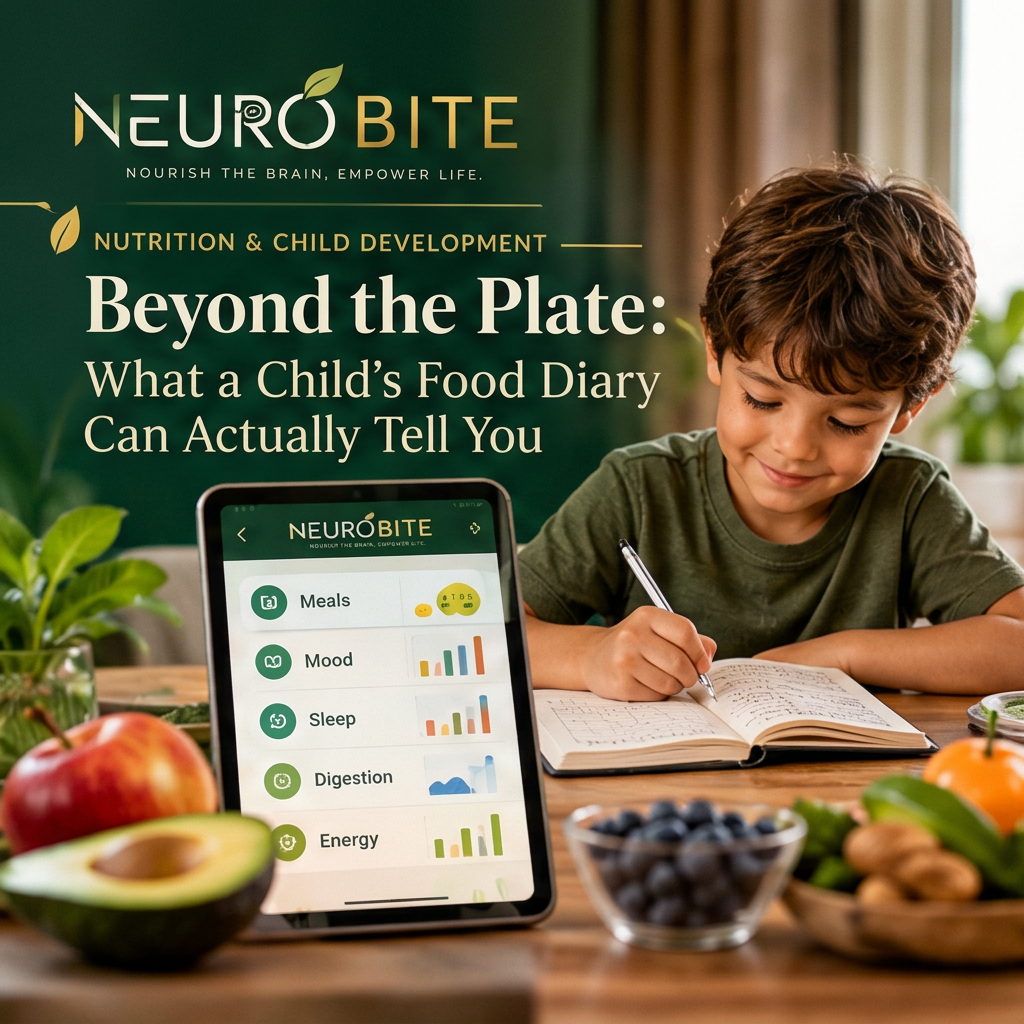
Beyond the plate: keeping a simple food and mood diary
How a short daily diary can help you notice patterns between food, sleep, mood and behaviour, and give your child's doctor or dietitian something useful to work with.
- #Autism
- #ADHD
- #Family
Most parents have a feeling that some days go better than others, and that food, sleep and routine all play a part. A diary turns that feeling into something you can actually look at.
Why a diary helps
Memory is unreliable when you are tired. A few lines a day, kept for two to four weeks, can show things you would never spot otherwise: that meltdowns cluster after late nights, that tummy aches follow skipped breakfasts, or that a "bad week" was really two bad days.
What we know, and what we don't
Research does not show that any single food causes autism or ADHD traits. What diaries do well is help families and professionals see individual patterns, such as constipation, poor sleep or long gaps without food, that can affect how a child feels and copes.
What to write down
Keep it short, or you will stop:
- What was eaten and drunk, roughly and without measuring
- Sleep: bedtime, wake time, night waking
- Mood and energy: a simple 1–5 score is enough
- Toilet habits and tummy comfort
- Anything unusual: illness, a new medicine, a change at school
Tips that make it stick
- Pick one time a day, such as after dinner.
- Use the NeuroBite tracker or a notebook on the fridge, whichever you will actually use.
- Don't change several things at once. If you try a new food, change one thing and watch.
- Look back weekly, not daily.
When to get professional advice
Bring your diary to your GP, paediatrician or a registered dietitian if you notice weight loss, ongoing constipation or diarrhoea, very few accepted foods, or big changes in sleep or mood. Please don't cut out whole food groups without professional support.

Neurobite
Sponsored · Paid partnership
Nourish the brain. Empower life.
Personalised nutrition and feeding support for children with autism and ADHD — meal plans, sensory-friendly recipes and progress tracking in one place.
neurobite.org
Nourish the brain. Empower life.
References
Educational content only. Always discuss dietary changes with your child's clinician.